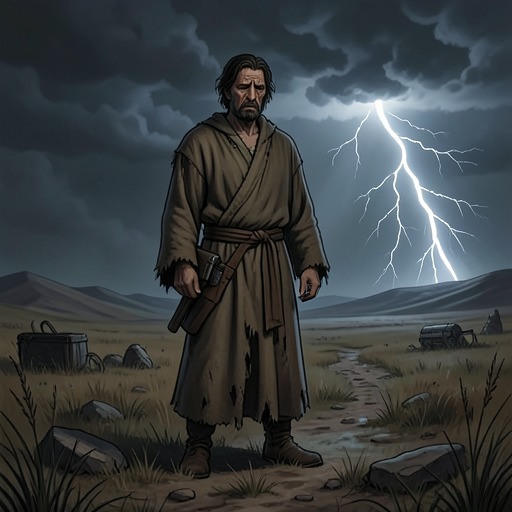
Zophar
Book of JobZophar the Naamathite is one of Job’s three friends and a participant in the book’s debate over suffering, justice, and the limits of human understanding. He comes first as a mourner, but his place in the story is ultimately shaped by his speeches and by the final judgment that the friends have not spoken rightly about God.
Identity and Arrival
Zophar is identified as the Naamathite. After hearing of Job’s calamities, he travels with Eliphaz and Bildad to mourn with and comfort him. The three recognize Job only from a distance; they weep, tear their garments, and sprinkle dust over their heads. They then sit with him on the ground for seven days and seven nights without speaking, because his grief is so great. Zophar’s introduction thus begins with shared mourning rather than argument.
Speeches in the Debate
Zophar speaks in the debate as a direct respondent to Job. His first recorded speech opens by asking whether a multitude of words should go unanswered and whether a talkative person should be considered justified. The opening frames his response as a challenge to Job’s case, though the excerpted passage does not establish the full argument that follows.
His next recorded speech begins by saying that his thoughts prompt him to answer and that he therefore makes haste. This opening gives his reply an explicitly urgent quality. The book presents him speaking within a wider dispute in which Job asks how a person can be just before God and doubts that a human disputant could answer God adequately. Job also says that no intermediary stands between them. These challenges mark the scale of the disagreement in which Zophar takes part, without making his individual speeches interchangeable with those of the other friends.
Conflict and the End of His Counsel
After Job’s speeches end, the three friends cease answering him. Elihu’s anger is directed both at Job, for justifying himself rather than God, and at the friends, because they have failed to answer Job yet have condemned him. Zophar is included in this collective failure: the narrative gives no further reply from him before God’s judgment.
When God addresses Eliphaz, the rebuke extends to his two friends. God says that they have not spoken rightly about him as Job has, and instructs them to bring seven bulls and seven rams for a burnt offering. Job is to pray for them, and God says he will accept Job’s prayer. Zophar therefore ends the debate not vindicated as a reliable interpreter of Job’s suffering, but among the friends whose words require correction and whose acceptance depends on Job’s intercession.
Narrative Role
Zophar’s role is defined chiefly through the contrast between the friends’ confidence in condemning Job and the book’s concluding judgment of their speech. The opening scenes show him sharing their sincere outward acts of grief; the later scenes place him among those who cannot answer Job but nevertheless condemn him. The final rebuke resolves his part in the dispute collectively rather than by supplying a separate confession or response from him.